
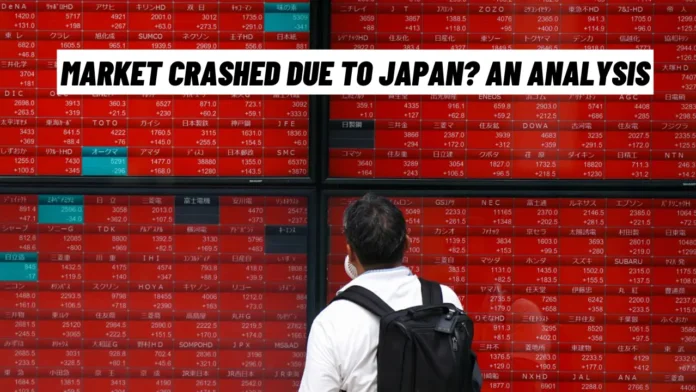
In recent days, global financial markets have experienced significant volatility, and many are pointing fingers at Japan as a primary cause. But what exactly happened in Japan to trigger such a reaction? Let’s delve into the factors behind this market turbulence and analyze their impact.
1. Bank of Japan’s Policy Shift
One of the main reasons for the market crash is the Bank of Japan’s (BOJ) unexpected policy shift. Historically known for its ultra-loose monetary policy, the BOJ recently hinted at potential interest rate hikes. This announcement shocked global investors who had been relying on Japan’s consistent low-rate environment.
2. Yen’s Strengthening
Following the BOJ’s announcement, the Japanese yen appreciated significantly against major currencies. A stronger yen can hurt Japan’s export-driven economy, leading to fears of reduced corporate profits and economic slowdown. This, in turn, spooked investors globally, causing sell-offs in various markets.
3. Stock Market Reaction
Japanese stock markets reacted swiftly to the BOJ’s policy shift, with major indices like the Nikkei 225 experiencing sharp declines. The ripple effect of this sell-off was felt across global markets, leading to widespread panic and further declines.
4. Global Supply Chain Concerns
Japan is a critical player in the global supply chain, especially in the technology and automotive sectors. Concerns about potential disruptions due to economic policy changes added to the market’s anxiety. Investors feared that these disruptions could have far-reaching consequences, exacerbating the market downturn.
5. Investor Sentiment and Speculation
Market crashes are often driven by investor sentiment and speculative behavior. The uncertainty surrounding Japan’s policy direction led to heightened risk aversion. Investors moved their assets to safer havens, further intensifying the market decline.
6. Broader Economic Implications
The potential economic slowdown in Japan raised concerns about global economic growth. As one of the world’s largest economies, Japan’s performance has a significant impact on global trade and investment flows. The fear of a broader economic slowdown contributed to the market’s bearish sentiment.

